Best Cat Food for Indoor Cats 2026

Expert reviews and honest comparisons to help you choose the perfect nutrition for your indoor feline friend
By Sana — Updated June 2026 · ⏱ 10 min read
I've been feeding indoor cats for over a decade, and let me tell you—finding the right food isn't as simple as grabbing whatever's on sale. Indoor cats have completely different needs than their outdoor counterparts. They're less active, more prone to weight gain, and spend way more time grooming (which means more hairballs, unfortunately).
After comparing dozens of brands — evaluating ingredients, AAFCO statements, verified buyer reviews, and vet-backed nutritional guidelines — I've narrowed down the best options for 2026. These aren't just the most popular or heavily advertised foods. They're the ones that actually made a difference for my cats and countless others in the community.
Whether your cat is a picky eater, needs to drop a few pounds, or you're just tired of dealing with stinky litter box situations, I've got you covered. And if you're also in the market for better litter solutions, check out our Best Cat Litter Boxes Reviews guide.
Top 5 Cat Foods for Indoor Cats in 2026

Pros
- Vet-recommended and extensively researched formula
- Controlled calorie content designed for weight management
- High-fiber blend specifically targets hairball control
Cons
- Pricier per pound than store-brand options
- Some picky cats take time to adjust to the flavor

Pros
- High protein turkey-first formula
- Live probiotic culture supports digestion
- Great option for cats with chicken sensitivities
Cons
- Some bags arrive with shorter shelf life than expected
- Rice-based carbs not ideal for very low-carb diet approaches

Pros
- Real chicken as the first ingredient
- No corn, wheat, soy, or artificial preservatives
- LifeSource Bits add vitamins and antioxidants
Cons
- Some cats selectively eat around the LifeSource Bits
- Slightly higher calorie count than some other indoor formulas
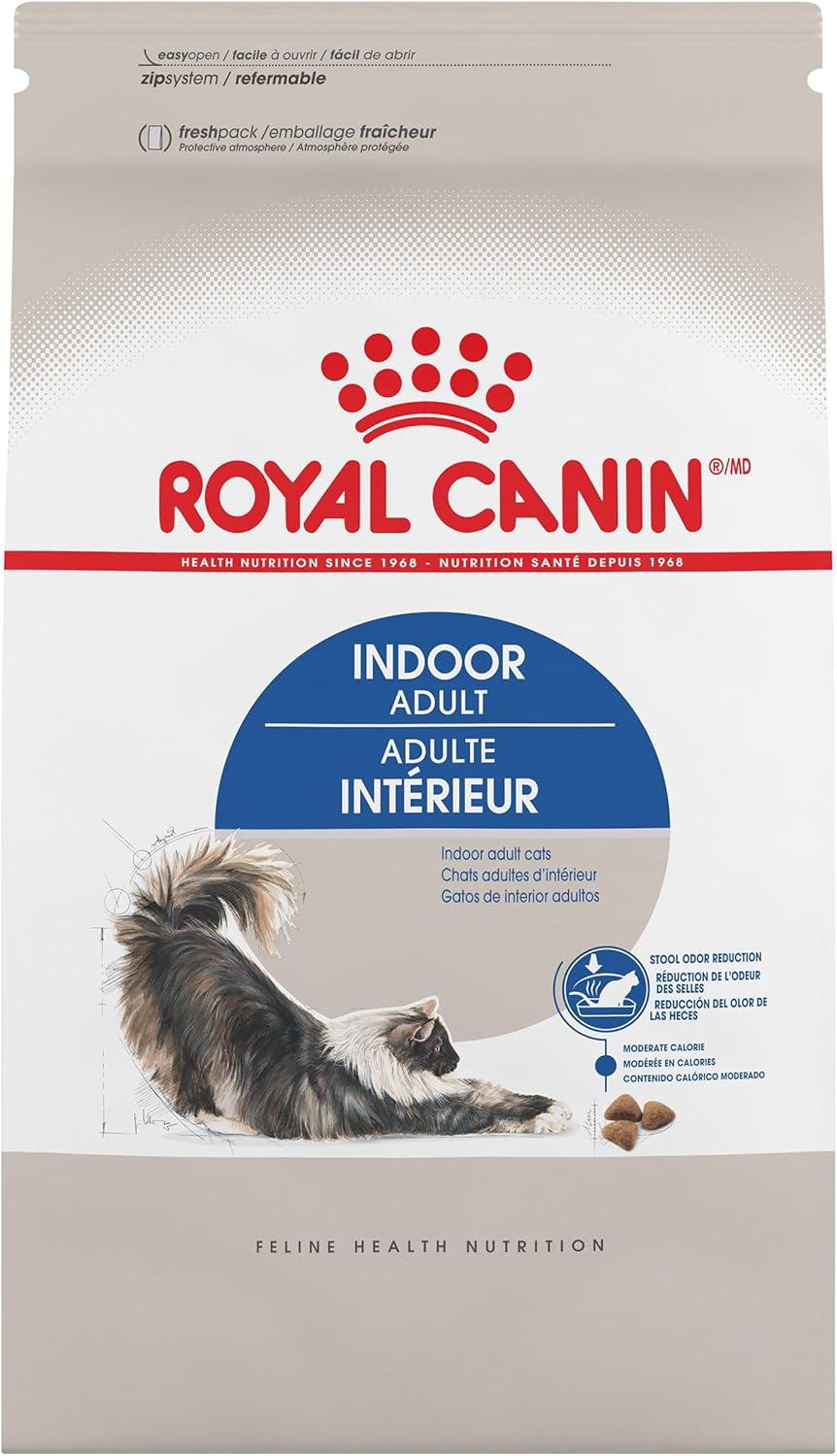
Pros
- Clinically researched formula from veterinary nutritionists
- Noticeably reduces litter box odor per verified buyers
- Lower fat content supports weight management in sedentary cats
Cons
- Ingredient list is less "clean" than grain-free alternatives
- Premium price with smaller bags per dollar

Pros
- High-protein, grain-free formula with clean ingredient list
- Strong omega fatty acid profile for coat health
- Good choice for cats with grain or filler sensitivities
Cons
- Higher calorie density requires careful portioning
- More expensive per pound than standard indoor formulas
Quick Comparison: Best Indoor Cat Foods
| Product | Best For | Price Tier | Key Strength |
|---|---|---|---|
| Hill's Science Diet Indoor | Overall best | $$$ | Vet-recommended, proven hairball control |
| Purina Pro Plan Indoor | Sensitive stomachs | $$$ | Probiotic-enhanced, high protein |
| Blue Buffalo Indoor Health | No-filler ingredient crowd | $$$ | Real chicken first, antioxidant blend |
| Royal Canin Indoor Adult | Litter box odor reduction | $$$$ | Clinical nutrition, odor control |
| Wellness CORE Indoor | High-protein diet advocates | $$$$ | Grain-free, omega-rich, clean label |
Our Top Pick
Hill's Science Diet Adult Indoor wins overall because it delivers proven, vet-backed nutrition at a price point that is premium but justifiable for daily feeding over a cat's lifetime. The fiber and protein balance is calibrated specifically for indoor cats, and the decades-long track record gives it an evidence base that newer brands simply cannot match yet. If your cat does well on Hill's, there is very little reason to change.
Weight Management Strategies for Indoor Cats
Indoor cats burn significantly fewer calories than outdoor cats — the difference can be 20 to 30 percent depending on how active or sedentary your individual cat is. This makes calorie control genuinely important rather than just precautionary. Measure your cat's food by weight using a kitchen scale rather than by cup, since cup measurements vary considerably based on kibble size and density. A typical healthy adult indoor cat needs around 200 to 280 calories per day, but check with your vet for the right target for your specific cat's age and body condition. If you notice your cat starting to feel rounder around the belly or losing their visible waist taper, reduce portion size by ten percent and reassess after four weeks. Monthly weigh-ins catch weight creep early before it becomes a health problem.
Digestive Health Considerations for Indoor Cats
Indoor cats are more likely to experience hairball-related digestive issues because they groom more and ingest more fur without the physical activity that helps pass it through. A food with added fiber — from sources like beet pulp, psyllium, or natural plant fibers — helps move ingested hair through the digestive tract rather than letting it accumulate. If your cat vomits hairballs more than once a week, trialing a dedicated hairball-control formula for 30 days is a reasonable first step. For cats with sensitive stomachs — loose stools, occasional vomiting, or selective eating — a highly digestible formula with limited ingredient sources often helps settle the gut. Regular brushing also reduces the volume of fur your cat ingests, especially important for long-haired breeds. Check our Best Cat Litter Boxes guide for how to monitor stool health through litter box observation.
Activity-Level Feeding Guides for Indoor Cats
Not all indoor cats are equally sedentary. A young cat between one and three years old who plays actively for 30 to 60 minutes daily has noticeably higher calorie needs than a seven-year-old cat who mostly sleeps. The feeding guidelines on cat food packaging are baseline estimates for a moderately active indoor cat — adjust up or down based on what you observe. Cats with access to multiple floors, vertical climbing structures, or active play sessions can typically be fed at the packaging recommendation or slightly above. Cats that genuinely spend eighteen-plus hours sleeping should be fed at the lower end of the range. If you have both activity types in the same household, scheduled individual meals are more manageable than free-feeding since the more active cat will often consume the sedentary cat's share.
Special Dietary Needs: Urinary Health and Hairball Control
Indoor cats are overrepresented in veterinary statistics for urinary tract issues, particularly among male cats. Lower activity means less frequent urination, allowing minerals in the urine to concentrate more than is healthy. Foods designed for urinary health have controlled mineral levels — specifically phosphorus, magnesium, and calcium — and are slightly acidified to reduce struvite crystal formation. If your cat has had a urinary blockage or crystal diagnosis, follow your vet's prescription diet recommendation over any general-market food. For hairball control, fiber content is the key variable: look for foods listing beet pulp, psyllium husk, or "natural fiber" in the first eight ingredients. A dedicated hairball-control food combined with regular weekly grooming sessions makes a significant difference for long-haired breeds like Maine Coons and Persians.
How to Read an Indoor Cat Food Label
The ingredient list on a cat food bag is ordered by weight before processing, so the first two or three ingredients tell you the most about what you are actually feeding. A quality indoor cat food should list a named animal protein — chicken, turkey, salmon — as the first ingredient, not a generic "meat meal" or a grain-based filler. The difference between "chicken" and "poultry by-product meal" is not always as dramatic as marketing suggests, since by-products can include nutritious organ meats, but named proteins with clear sourcing are generally the safer, more consistent choice.
The guaranteed analysis panel shows protein, fat, fiber, and moisture minimums and maximums. For indoor cats, target foods with at least 30% protein on a dry matter basis — strip out the moisture percentage to compare wet and dry foods fairly — moderate fat around 12 to 18%, and fiber above 2% to support hairball control. The "complete and balanced" statement refers to AAFCO standards: look for "formulated to meet AAFCO nutritional profiles" rather than just "tested" language, as formulated recipes are held to consistent nutritional standards regardless of batch variation.
Ignore the marketing on the front of the bag entirely. Words like "natural," "gourmet," "premium," and "holistic" have no regulated definition in pet food and mean nothing nutritionally. Turn the bag over and read the actual ingredients and guaranteed analysis. If a food claims to be grain-free, verify it in the ingredient list rather than trusting the front label — grain-free claims are not independently audited.
Signs Your Cat's Food Isn't Working
Even a good-quality food can be a poor fit for a specific cat. The signs that a food is not working are often gradual and easy to miss until they compound into something harder to address. The most immediate signal is stool quality — loose or inconsistently shaped stools usually appear within a week or two of a diet change. A healthy cat should produce firm, formed stools once or twice daily. Chronic soft stools or diarrhea that persists more than a few days after a food switch warrants a call to the vet and a temporary return to the previous food while you reassess.
Excessive hairballs — more than once a week — in a cat already on a hairball-control formula suggest the fiber content is not adequate for your individual cat's coat type or grooming habits. Try a food with a higher stated fiber percentage, or supplement temporarily with a hairball paste from the vet. A dull, dry, or flaky coat often points to insufficient omega fatty acids, which is worth addressing with a fish oil supplement squeezed onto meals while you transition to a more omega-rich formula.
Consistent weight gain despite feeding within the recommended range is a clear sign you need a lower-calorie formula or a portion reduction — individual cat metabolisms vary far more than the packaging guidelines assume. Unexplained weight loss in an older cat, on the other hand, is always worth discussing with a vet promptly, since it more commonly points to hyperthyroidism, kidney disease, or dental pain that makes eating uncomfortable rather than a food quality problem. When in doubt, a vet wellness visit gives you a body condition score and specific feeding targets that take all the guesswork out of portion decisions.
Frequently Asked Questions
For more on keeping your indoor cat thriving, check out our Best Cat Water Fountains guide — hydration is one of the most overlooked aspects of indoor cat health. And if you also have a dog at home, our Best Dog Food for Large Breeds rounds out your whole-household nutrition knowledge.